
Lexington, SC · Hot water problems
No hot water or a leaking tank? Water heater repair in Lexington, SC, gas or electric
No hot water on a cold morning and a puddle at the base of the tank are different problems. One can be a short repair. The other means the tank has failed. Knowing which you have saves a repair call you did not need, or a flood you could have stopped.
Call us and say whether the heater is gas or electric and what you see. One of our plumbers can diagnose it and tell you if a repair is still worth doing.
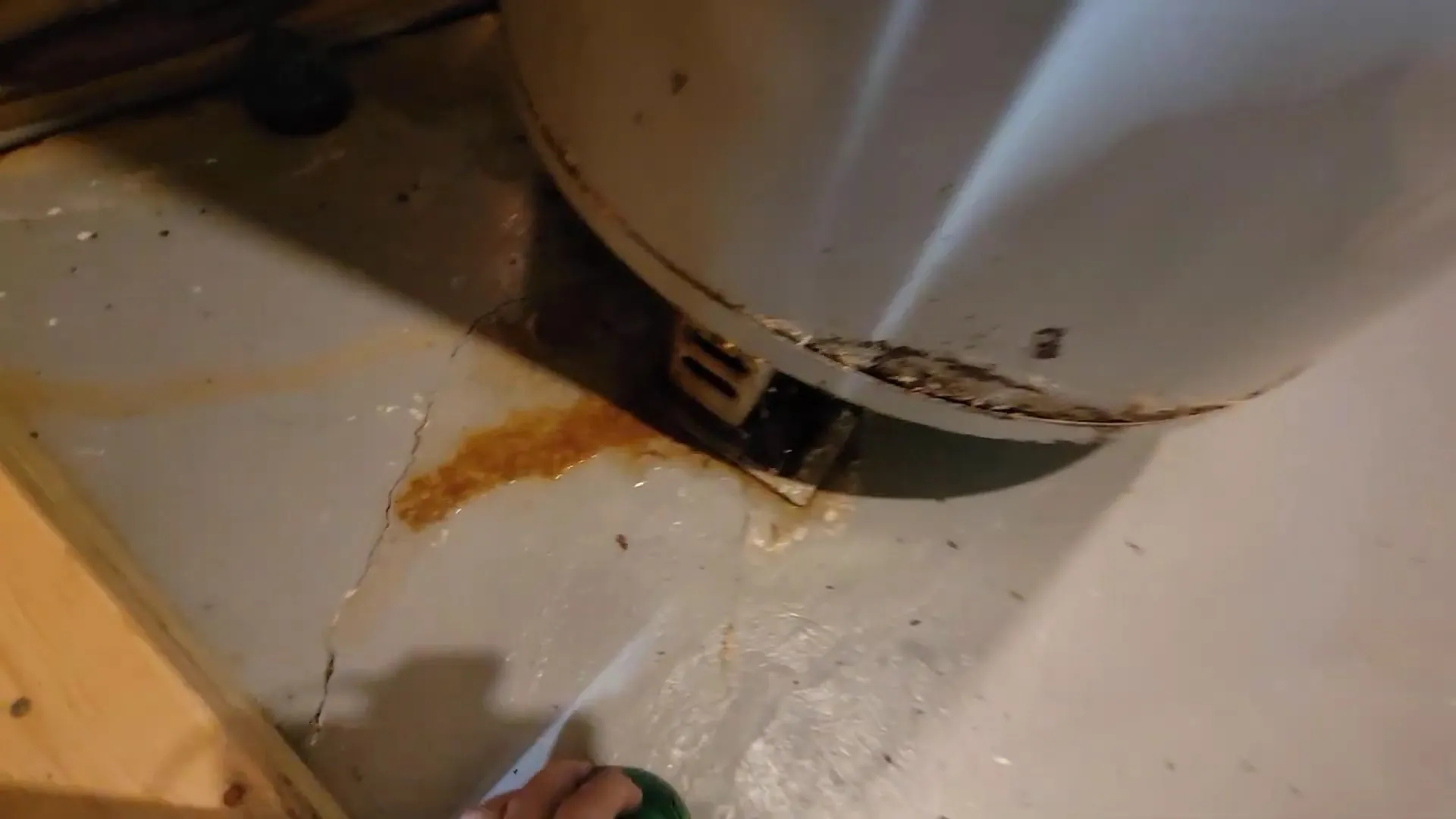
Where is the water coming from?
Dry the floor and the tank with a towel, then watch where the first drop forms. Condensation on a cold tank can look like a leak, but it dries up when the room warms. A real leak keeps coming back.
| Where it drips | Likely cause | What usually happens next |
|---|---|---|
| Pipe connections on top of the tank | Loose or corroded fittings | Repair; the tank is fine |
| The discharge pipe from the relief valve | A worn relief valve or high pressure in the system | Repair; this is a safety device and needs a plumber |
| The drain valve near the bottom | A worn valve or gasket | Repair |
| The base or seams of the tank | The tank itself has failed | Replace; it cannot be patched |
If the leak is steady, close the cold supply valve above the heater and call. A leak at the tank body is a plumbing emergency because it will not stop on its own.
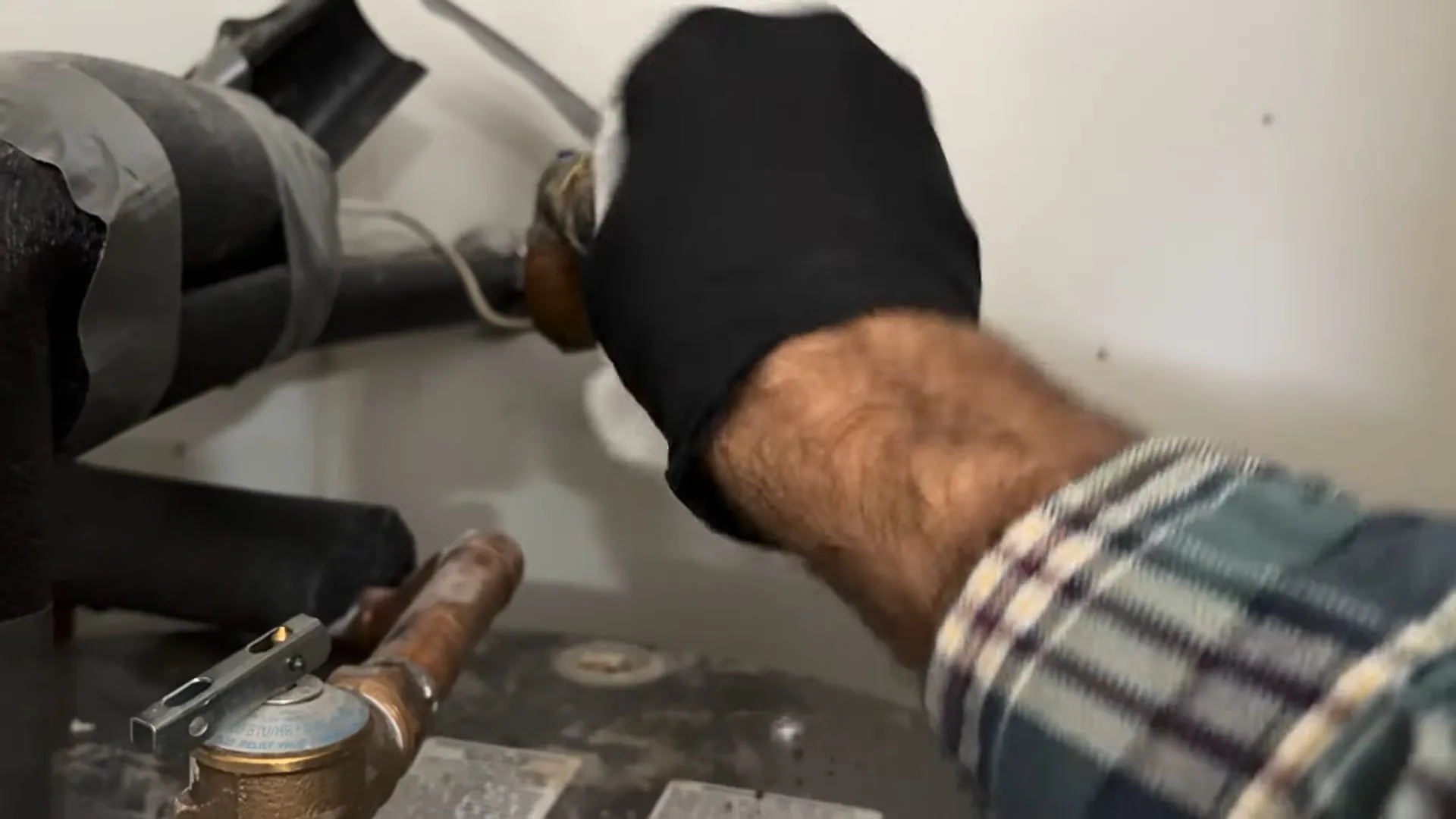
Gas heater with no hot water
A gas heater needs a lit burner, a gas supply and a clear vent. The usual failures are a pilot light that will not stay lit, a worn thermocouple that cannot sense the flame and a gas control valve that has stopped opening.
- Check that the gas control is set to the on or pilot position, not off.
- Read the label on the tank for the lighting steps, and follow them once. Do not repeat it if the flame will not hold.
- If you smell gas at any point, leave the house and call your gas utility or 911 first.
- Do not work on the burner or gas connections yourself.
If the pilot is fine but the flame is weak or the unit shuts off, the vent or the gas supply may be the cause. Gas piping faults belong with gas supply testing, and a plumber should look at both.
Electric heater with no hot water
Electric heaters fail in a short list of ways: a tripped breaker, a tripped high-limit reset button, a burned-out heating element or a thermostat that has stopped working.
- Check the breaker for the heater at the panel and reset it once if it has tripped.
- Lukewarm water, rather than none, often means one of the two elements has failed.
- If the breaker trips again right away, stop and call. Repeated trips point to a short.
- Leave the access panels on the tank closed. They hide live wiring.
An electrician and a plumber may both be needed if the fault is in the circuit rather than the heater. Ask the plumber to say which it is before replacing parts.
Hot water missing at one fixture only
If hot water is fine everywhere except one tub or sink, the heater is probably not the problem. A worn mixing cartridge or a clogged aerator at one fixture, or a crossed supply line, produces the same complaint. A single bad faucet is a smaller job than a heater you did not need to touch.
If the farthest fixture takes a long time to warm up, that is distance, not a failure. It often improves with a recirculating loop or by moving the heater, which is an install decision rather than a repair.
If hot water is scalding anywhere, check the thermostat setting on the tank before you call. Higher settings raise the scald risk, especially for children and older adults.
Repair or replace: where to draw the line
Find the age on the data plate. A tank that is old and leaking from its body is a replacement. A sound tank with a failed part is usually worth repairing, even at that age.
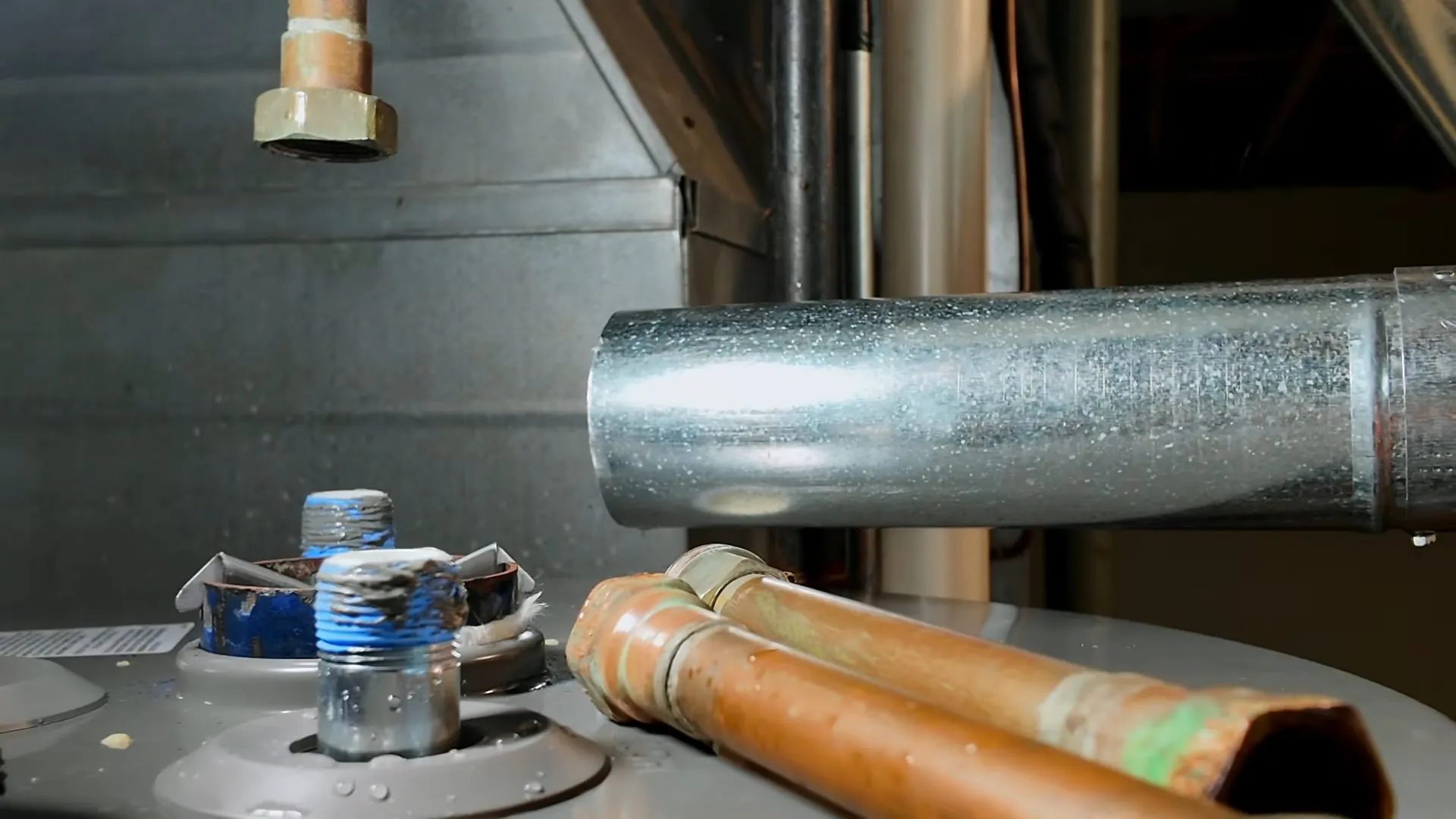
- Repair when the tank is dry and the problem is a part: thermostat, element, valve, thermocouple or fitting.
- Replace when the tank body leaks, the water runs rusty or the repair costs approach the price of a new unit.
- Ask for the repair option and the replacement option explained side by side.
For the replacement side, see replacing the tank. Tankless heaters repair differently, and tankless units have their own page.
Lexington County requires a permit to install or replace a plumbing system and exempts ordinary repairs. A new element or valve is a repair. A new tank is a replacement. Ask the plumber which one your job is, and ask for the license holder's name to check on the state lookup before work begins.
Relief valve and discharge pipe: safety parts to leave intact
A water heater has a relief valve that opens if the pressure or temperature rises too high. The discharge pipe from that valve must run to a safe place and must not be capped or plugged. If it drips regularly, the valve or the system pressure needs attention, and a plumber should look at it.
Ask the plumber to check for an expansion tank on a closed system, because pressure swings stress the valve and the tank. A small tank on the supply side absorbs the swings, and its absence is a common reason a relief valve drips.
- Do not cap or plug the relief valve discharge pipe.
- Do not raise the thermostat to get more hot water. Higher settings raise the scald risk and the wear on the tank.
- Do not remove panels on an electric heater. They hide live wiring.
Facts the plumber will ask for
- The fuel type, gas or electric, and the approximate age from the data plate.
- Where the water is, if there is a leak, and whether it is steady or occasional.
- Whether the heater has been serviced or flushed and when.
- Whether hot water is missing everywhere or at one fixture.
A plumber who has these facts when the call comes in can bring the right parts on the first visit.
Water heater problems that need a visit today versus later
Call now
- Water flowing from the tank body or pooling around it
- A relief valve discharge pipe running steadily
- A smell of gas near the heater
- Hot water that is scalding at every tap
Can wait for a scheduled visit
- Lukewarm water from an electric heater
- A dripping connection you can slow with the supply valve closed
- Rumbling noises from the tank
- Hot water slow to arrive at the farthest tap
If the leak has already wet the floor, drying after a tank leak should start as soon as the leak is stopped, because wet materials get harder to save with time. Repair cost factors lists what moves a quote, and pipes near a garage or attic heater should be insulated before the average last freeze on March 16 each spring, according to the National Weather Service.
Heater out or leaking?
Call us and say whether it is gas or electric. One of our plumbers can diagnose it.
Call (833) 571-0120