
Lexington, SC · No-dig sewer repair
Sewer pipe cracked but not collapsed? Trenchless pipe repair in Lexington, SC without trenching the yard
A cracked or root-invaded sewer pipe usually means a trench through the yard, the driveway or the patio. Trenchless repair avoids most of that. A resin liner is pulled through the old pipe and cured in place, so the pipe is restored without opening the ground along its whole length. Below is how the trenchless pipe repair Lexington homeowners ask about works, and when a pipe still has to be dug.
Call us and describe the backups or the camera findings you have. One of our plumbers can tell you if your pipe is a candidate or if it needs to be dug.
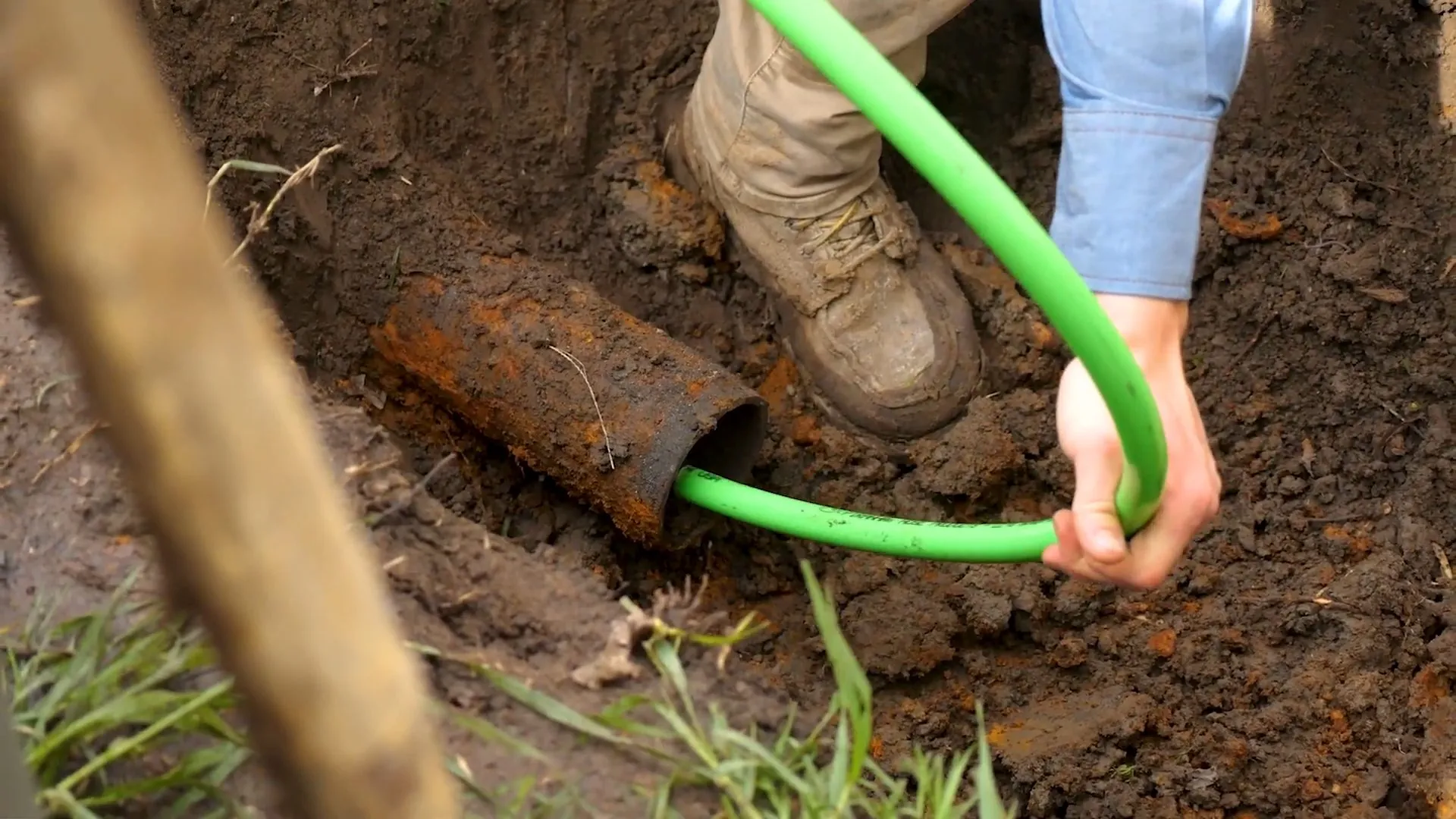
Trenchless or open trench: how the choice is made
The pipe decides, not the preference. Lining works when the pipe is still in line and has a continuous path through it. It does not work when the pipe has fallen apart.
| What the camera shows | Trenchless likely fits? | Why |
|---|---|---|
| Cracks or hairline splits along the pipe | Often yes | The liner seals the crack from inside |
| Roots entering at joints | Often yes, after cleaning | The liner closes the joint |
| An offset joint, where pipes have slipped apart | Sometimes | Depends on the size of the offset |
| A belly that holds standing water | Usually no | The liner follows the sag and the water stays |
| A collapsed or crushed pipe | No | There is no path to line |
If the pipe cannot be lined, the repair becomes traditional sewer line repair, which opens a trench to replace the damaged section.
What gets disturbed is part of the decision. A line under a lawn is easy to restore. A line under a driveway, a patio or a mature tree changes the comparison, because the trench and the restoration are most of the work. Ask for the trenchless and the open-trench options priced and described side by side.
What the camera has to show before anyone quotes lining
- A continuous path from the cleanout to the connection, with no collapse.
- The pipe diameter, material and the length to be lined.
- The number of bends and any changes in pipe size along the run.
- No standing water from a belly in the section to be lined.
- The location of each connection that joins the line, so each can be reopened.
The pipe is cleaned before lining, often by jetting before lining, because the liner needs a bare wall to bond to. Ask for the pre-lining camera video and the post-lining video.
How the lining goes in, step by step
- Clean the pipe so the liner can bond to bare wall.
- Inspect on camera and measure the section to be lined.
- Pull in the liner. A flexible tube saturated with resin is drawn through the old pipe.
- Inflate and cure it. The liner is pressed against the wall while the resin hardens, which takes hours rather than days.
- Reopen the connections and run a final camera pass.
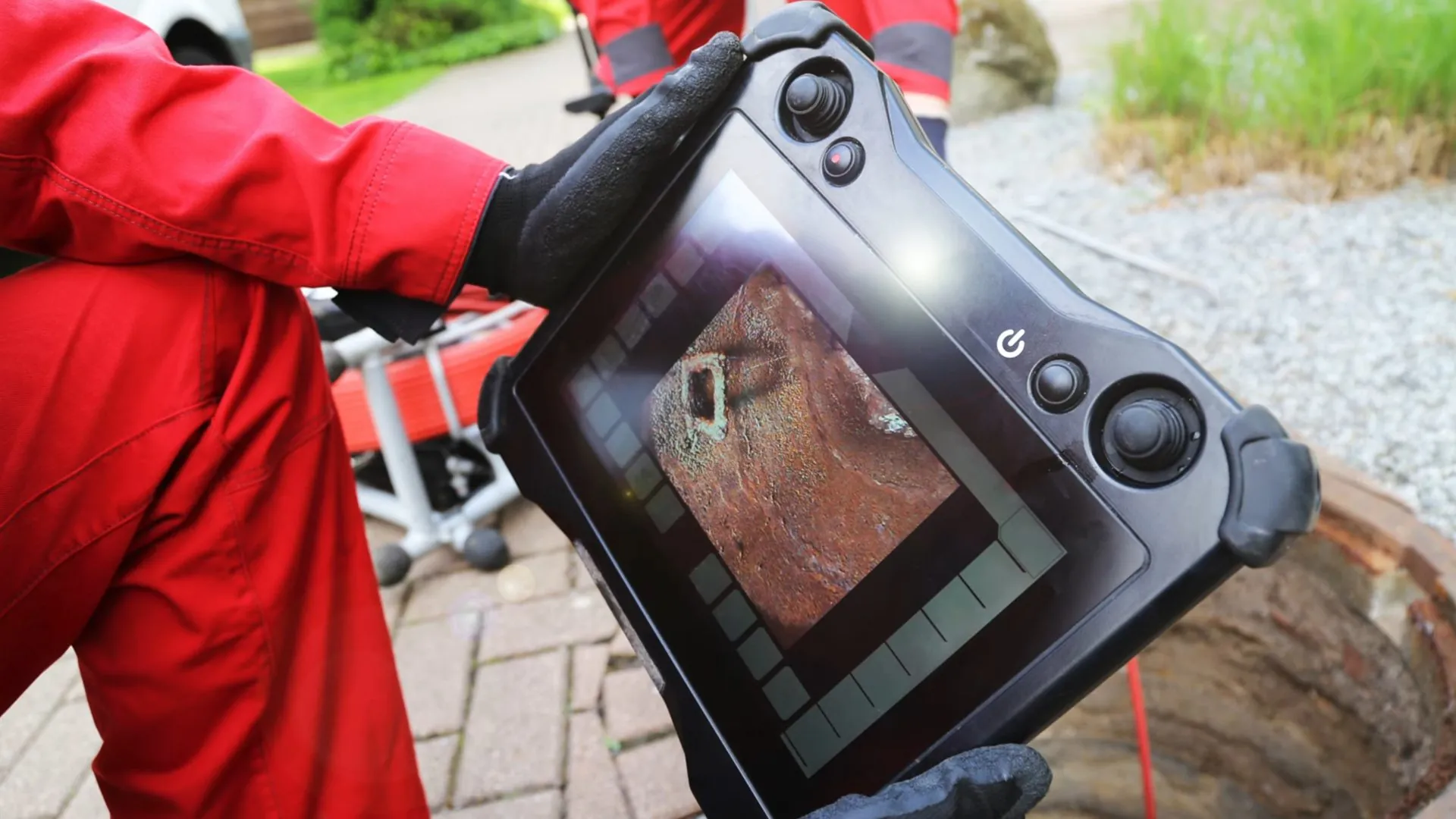
Do not flush or run water until the plumber says the liner has cured. The result is a pipe inside a pipe, which is smoother than the old wall. Ask what the liner is made of and how it is warranted, in writing.
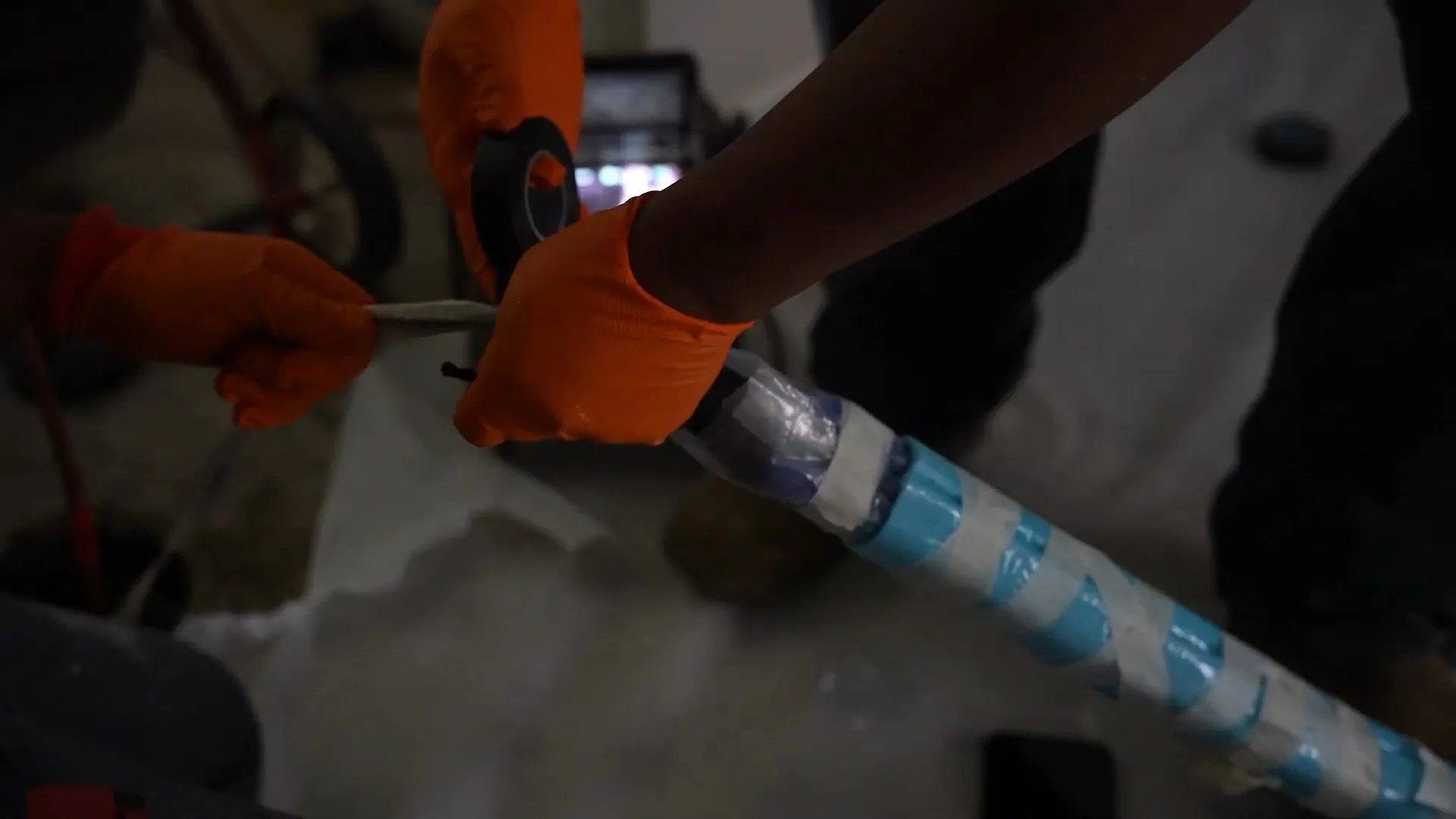
Plan for a day without water use in the house. Ask the plumber for the schedule, including the hours when the line is out of service, and where to shower or run the washer in the meantime. A good estimate of the cure time is part of the quote, not a surprise on the day.
Access points and pits that trenchless repair still needs
Trenchless does not mean no digging. Access points are needed at both ends, usually a cleanout or a small pit. Some jobs need a pit where a liner cannot be pulled around a sharp bend.
Call 811 through SC811 before any pit is dug, so buried lines are marked. Ask the plumber who requests the locate and how the pit will be refilled and restored.
Pipe material and how much to line
Lining bonds to the inside of the old pipe, so the pipe has to be the right kind and the right shape for it. Ask the plumber to say what the pipe is made of, for example cast iron, clay or plastic, and whether the liner suits it.
A single damaged joint can sometimes be repaired with a short liner, called a patch, rather than relining the whole run. Ask for both options: a spot lining and a full run, with the reason the plumber prefers one. A full run costs more to install but removes the weak joints between spots.
- Ask how long the lined section will be and where it starts and ends.
- Ask which connections will be reopened after lining.
- Ask what happens if the camera finds something unexpected partway through.
After lining: what to keep and what to tell a buyer
Keep the final camera video, the permit if one was pulled and the written warranty. These show a future owner or an inspector that the line was repaired and how.
Tell a buyer about the lining when you sell. A lined sewer line is a selling point for some buyers and a question for others, and surprises are worse than disclosure. Ask the plumber to put the length, the date and the material on the invoice.
If the line backs up again after lining, call the plumber who did the work before calling anyone else. The cause may be a connection that was not reopened or a blockage downstream of the lined section.
Slab and under-floor lines: the same idea, a different job
Lining and rerouting can also apply to lines that run under a floor slab, where breaking concrete is the alternative. That is a different repair with its own limits, covered under slab leak rerouting.
The method is shared, but the decision is not. A sewer lateral in a yard and a supply line under a floor are different pipes with different failure modes.
Permit, license and the Town
Lexington County requires a permit to install or replace a plumbing system and exempts ordinary repairs. Lining sits in a gray zone between the two, so ask the plumber how the permit office treats it and who pulls the permit. Inside the Town of Lexington the Town may apply its own rules, which were not confirmed for this page.
The Town provides sewer service at (803) 358-1581, and Lexington ZIP codes reach well beyond the Town. Ask the utility that bills you where its pipe ends and yours begins. Look up the license holder on the state license lookup before work begins.
For a sense of how lining is priced, lining cost factors lists the drivers, and trenchless questions answered covers what happens on a call.
Sewer backing up and a trench is the last thing you want?
Call us and describe what you know. One of our plumbers can camera the pipe and tell you if lining fits.
Call (833) 571-0120